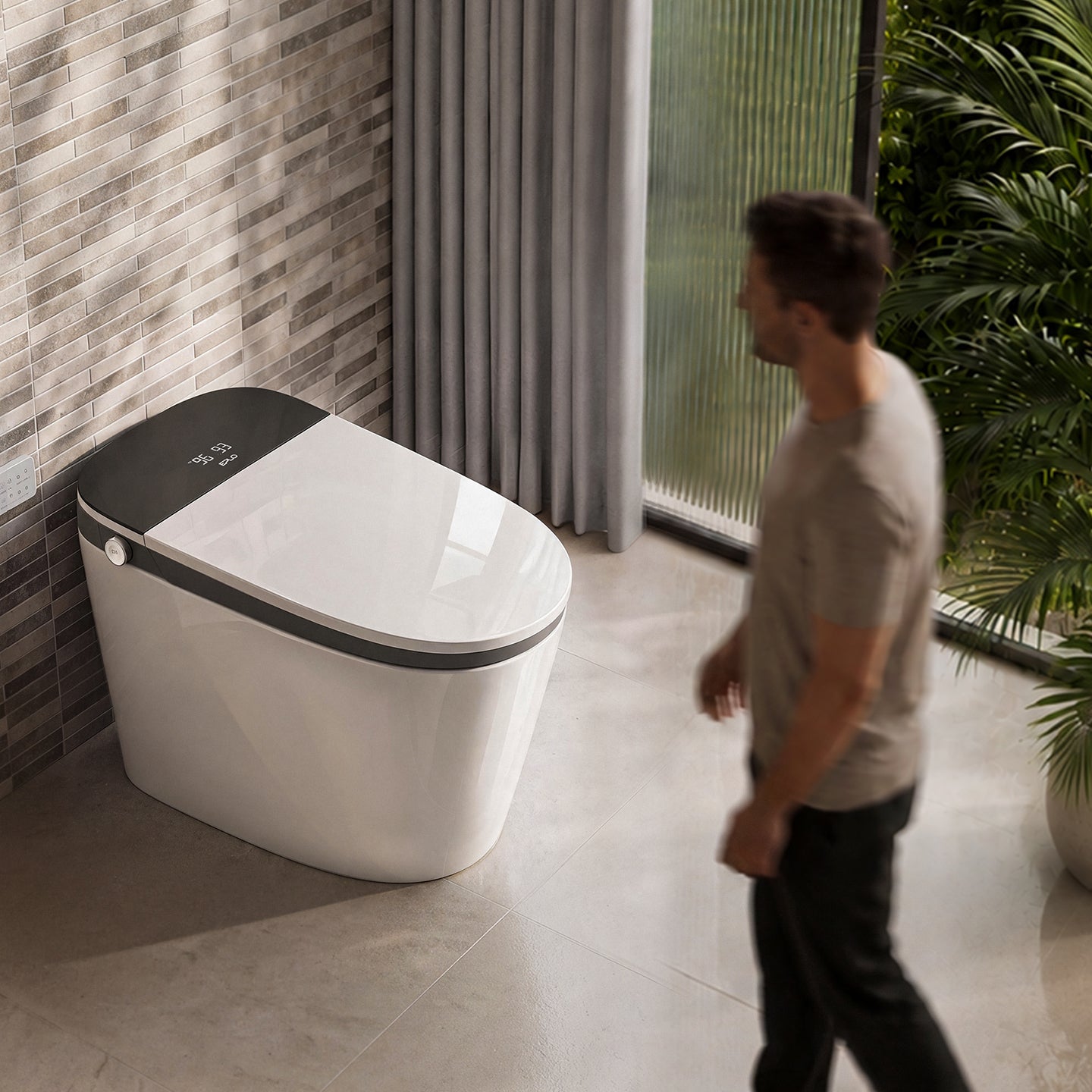

What Does a Smart Toilet Do? Smart Toilet Features Explained

If you've never used one, a smart toilet can sound like overkill. Isn't a toilet just supposed to flush?
It is. But a smart toilet combines several bathroom functions in one unit, including bidet washing, a heated seat, warm air drying, and automatic flushing. The idea is pretty simple: make something you use every day more comfortable and convenient.
So, what does a smart toilet actually do? Here's what to know.
What Is a Smart Toilet?
A smart toilet is an electric toilet that does more than flush. Depending on the model, it can provide personal washing, seat warming, warm air drying, automatic flushing, and other hands-free features. The exact features vary from one model to another. Some focus on the basics, while more advanced smart toilets combine additional comfort and hygiene functions.
1. Built-In Bidet Washing
This is one of the main reasons people choose a smart toilet.
Instead of relying on toilet paper alone, a smart toilet uses a stream of water for personal cleaning. Many models allow you to adjust the water temperature, water pressure, and spray position to find a setting that feels comfortable.
For many users, the built-in bidet is the biggest difference between a smart toilet and a regular toilet.

2. Heated Toilet Seat
A heated toilet seat may seem like a small feature, but it's something you notice every time you use the toilet, especially on a cold morning.
Many smart toilets allow you to adjust the seat temperature, so you can choose a setting that works for you.
3. Warm Air Drying
After the bidet wash, some smart toilets provide warm air drying to help dry the skin and reduce the need for toilet paper.
Depending on the model, you may be able to adjust the drying temperature or airflow. Some models offer only a basic drying setting.

4. Automatic Flushing
Many smart toilets offer automatic flushing using sensors.
On models with automatic flushing, sensors can detect when you're finished using the toilet and trigger the flush without requiring you to press a button or pull a handle. Some models also provide a manual flush option when you prefer to operate it yourself.
5. Automatic Lid
Some smart toilets also have an automatic opening and closing lid.
The lid can open when you approach and close after you leave, depending on the model's sensor settings. It's not an essential toilet function, but it can make the bathroom feel more convenient and hands-free.

6. Additional Hygiene Features
Smart toilets can also include features designed to make everyday cleaning and maintenance easier.
Depending on the model, these may include self-cleaning bidet nozzles, pre-wash functions, deodorization, and other hygiene features.
Because these functions aren't standard across every smart toilet, it's worth checking the product specifications before you buy.
How Does a Smart Toilet Work?
A smart toilet combines electricity, water, sensors, and electronic components and controls to operate its different functions.
For example, you can use the remote control or side controls to start a bidet wash, adjust the water pressure or temperature, and activate the warm air dryer. Depending on the model, sensors can also control functions such as the lid or automatic flush.
You don't need to use every feature every time. Most people simply find the settings they like and use those regularly.

What Are the Benefits of a Smart Toilet?
For many people, the most useful features are the ones they use every day: bidet washing, a heated seat, warm air drying, and automatic flushing.
A smart toilet can also be a good choice if you're remodeling a bathroom and want a more streamlined, integrated look without adding a separate bidet.
Frequently Asked Questions
Do smart toilets need electricity?
Yes. Most full-featured smart toilets require an electrical outlet to power functions such as bidet washing, the heated seat, warm air drying, sensors, and electronic controls. If your bathroom doesn't already have a suitable outlet, it's important to plan for one before installation.
Do smart toilets use more water?
Water use depends on the model, flush system, and how often the bidet function is used. A smart toilet uses water for flushing and, when the bidet function is used, for personal washing. Check the manufacturer's specifications for the toilet's flush volume and water requirements.
Are smart toilets the same as bidet toilets?
Not exactly. A bidet toilet generally refers to a toilet with an integrated bidet washing function. A smart toilet typically combines bidet washing with additional electronic features such as a heated seat, warm air dryer, sensors, remote control, or automatic flushing.
There is some overlap between the two terms, and manufacturers may use them differently.
Final Thoughts
So, what does a smart toilet do?
It can wash, warm, dry, flush, and automate parts of your bathroom routine — all in one unit.
If you're considering a smart toilet, don't just look at the number of features. Think about which ones you'll actually use every day, then check the toilet's rough-in size, bathroom clearance, electrical requirements, water connection, and installation requirements.
The best smart toilet isn't necessarily the one with the longest feature list. It's the one that fits your bathroom and works well with your daily routine.